The Session That Started Without Them: Auditing a Scientific Meeting From Curb to Closing Reception
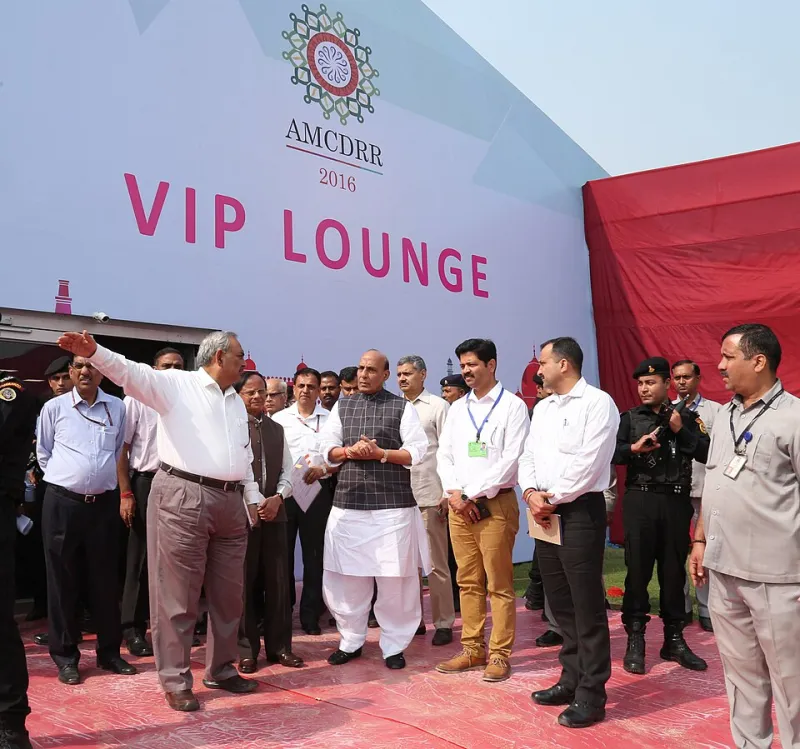
Photo: Ministry of Home Affairs, GODL-India, via Wikimedia Commons
Walk into almost any American scientific meeting and you will see the evidence of good intentions: a lowered section of the registration counter, a blue accessibility icon on the program PDF, a captioning vendor listed among the exhibitors. The compliance boxes are checked. And yet, by the second morning, a disabled attendee has already missed a session, gone without a meal, and begun quietly calculating whether next year's dues are worth it.
Accessibility at a conference is rarely one dramatic failure. It is an accumulation of frictions, each survivable on its own and disabling in combination. What follows is an audit of a typical meeting, arrival to closing reception, and a practical set of budget lines societies can adopt rather than improvise.
Arrival Is the First Test
The plan begins to erode before the badge is printed. A hotel room block that holds accessible rooms until 30 days out, then releases them, leaves the late registrant negotiating with a reservations line. A conference shuttle that runs every 30 minutes is, for someone using a power chair, not a shuttle but a schedule problem. Curbside drop-off points that were designed for taxis and then handed to rideshare drivers often sit a block from the door.
Program committees tend to plan arrival as logistics. For disabled members it is the moment they learn whether the meeting was designed with them in mind. A short, published "what to expect" page, written with disabled members and updated annually, resolves more anxiety than any single amenity.
The Poster Hall Is Where Intentions Fail
Poster sessions expose the gap between compliance and usability. Boards mounted so a seated presenter cannot make eye contact with a standing visitor. Aisles narrowed by chairs pulled from the back of the hall. Lighting that throws glare across laminated figures. No seating anywhere in a room where conversations routinely last 90 minutes.
None of these require a major capital investment. They require a floor plan reviewed by someone who will actually use it, a rule about keeping aisles clear, and a supply of stools. Societies that treat the poster hall as a social space rather than a storage space tend to get this right; societies that treat it as a compliance photograph do not.
Sensory Load Is a Scheduling Decision
Much of what exhausts disabled attendees never appears on an accessibility checklist. Six consecutive sessions without a break. Fluorescent lighting that cannot be dimmed. Question-and-answer periods where the microphone stays at the podium. A closing reception in a room where the noise floor makes conversation impossible and the only seating is a barstool.
The quiet room deserves particular scrutiny. Rooms designated as quiet are frequently placed beside the exhibit hall entrance or the coffee service, and are then reported as available. A quiet room in a high-traffic corridor is a storage closet with a sign on the door.
Scheduling also collides with medical reality. Members managing medication routines, insulin, dialysis, or chronic pain do not experience a 7:00 a.m. keynote and a 7:00 p.m. reception as a balanced day. Offering recordings and repeat sessions is not a courtesy; it is the difference between attending and auditing.
The Money Moves First, and It Moves Against Some Members
Reimbursement-after-the-fact travel support quietly assumes a credit card with headroom. For members traveling with a personal care attendant, the costs double before the first receipt: a second airfare, a second hotel night, accessible ground transportation that is often priced above standard service. Mobility devices incur baggage fees and, occasionally, damage. Many travel awards are capped at a number that presumes an able-bodied traveler.
Societies that have examined this typically move in three directions: per diem advances for members who request them, an explicit line for attendant travel, and a short statement in the award terms acknowledging that accessibility costs are reimbursable. The third item costs nothing and changes behavior immediately.
Captioning Is Not the Same as Access
A captioning vendor under contract is a starting point. The failures appear downstream: captions that are not displayed on the session screen, interpreters requested after the vendor's deadline, speakers who turn away from the microphone, and audience questions taken from the floor with no mic at all. A hybrid platform without live transcripts is a meeting that is broadcast rather than opened.
Accessible materials are part of the same problem. A slide deck that is a scanned image is unreadable to a screen reader. Posters distributed as flat PDFs are unusable. These are production decisions, and they are cheapest to make when the abstract acceptance letter asks for them.
A Working Checklist for Program Committees
- Publish an accessibility page 90 days before registration opens, not 30.
- Hold accessible hotel rooms in the block until the block closes, and confirm the process with the property in writing.
- Review the poster hall floor plan with at least two disabled members before printing signage.
- Place the quiet room away from the exhibit hall, the coffee service, and the escalators.
- Require microphones for all audience questions, in every room, without exception.
- Fund an attendant travel line and a per diem advance option.
- Request accessible slides and materials at acceptance, and provide a one-page guide on producing them.
- Pay disabled members an honorarium for advisory service; unpaid consultation is a subsidy, not a partnership.
- Survey attendees with disability-specific questions after the meeting, and publish what changed as a result.
What Participation Actually Costs
None of these items is exotic, and most of them are inexpensive relative to an exhibit hall carpet. What they require is a budget line for accessibility that is a percentage of the meeting budget rather than a rounding error, and a named staff owner who reports on it annually.
The measure of a meeting is not whether a wheelchair can enter the building. It is whether the person in it leaves with a collaborator, a grant lead, or a reason to come back. Societies that audit their own meetings from curb to closing reception tend to discover that the cheapest fixes are the ones that matter most, and that the expensive ones are worth the money anyway.