KSMV Science Society Advancing research, connecting scientists

KSMV Science Society

Advancing research, connecting scientists

Latest Articles

Assigned, Not Left to Chance: How Structured Matching Is Fixing the Mentorship Gap in American Labs
Member Life

Assigned, Not Left to Chance: How Structured Matching Is Fixing the Mentorship Gap in American Labs

Informal mentorship rewards those who already have connections, leaving too many talented trainees without guidance. A growing number of institutions are replacing luck with data — and the results are reshaping how scientific societies think about member development.


Beyond the Impact Factor: Why American Science Is Rethinking How We Judge a Career
Science Policy

Beyond the Impact Factor: Why American Science Is Rethinking How We Judge a Career

For decades, citation counts and grant dollars have served as the de facto report card of American science. A growing movement of universities and professional societies is testing narrative CVs, open peer review, and other frameworks that ask a harder question: what does a good scientist actually look like?

Member Life

Half the Household, Full Load: The Leave Policies That Still Count on One Career

Sabbatical rules, parental leave, and travel grants were drafted for a household with a single academic career. KSMV members describe the improvisations that fill the gap—and what a society-built model policy might look like.

When Two Careers Share One Bench: Rethinking How Scientific Societies Serve Dual-Scholar Households
Member Life

When Two Careers Share One Bench: Rethinking How Scientific Societies Serve Dual-Scholar Households

Dual-scientist couples form a substantial and often invisible share of the research workforce, yet most professional societies address their needs only at the margins. Drawing on conversations with co-authoring couples, this opinion piece argues for a broader agenda — including society-level recognition of family-supportive lab environments.

Reading the Reviews: What a Declined Proposal Can Teach Us About Better Science
Science Policy

Reading the Reviews: What a Declined Proposal Can Teach Us About Better Science

Rejection letters are among the most widely read documents in American science, yet the least discussed. KSMV members reflect on what declined proposals taught them about sharpening questions, assembling teams, and enduring a funding climate where even excellent work goes unfunded.

One Offer, Two Careers: How Remote Searches Are Rewriting the Dual-Career Hire
Science Policy

One Offer, Two Careers: How Remote Searches Are Rewriting the Dual-Career Hire

Hybrid hiring has changed the calculus for academic couples negotiating shared careers. Interviews with recent job seekers and department chairs reveal where remote searches create openings — and where they quietly close doors.

Stranded Instruments: The Quiet Cost of Equipment That Sits Unused
Laboratory Technology

Stranded Instruments: The Quiet Cost of Equipment That Sits Unused

A quarter-million-dollar mass spectrometer gathering dust in a basement core facility is more common than most institutions admit. KSMV examines the full lifecycle cost of laboratory instrumentation and asks whether equipment-sharing networks could turn stranded assets into working science.

Nobody Hands You a Syllabus: The Management Skills New Principal Investigators Wish They'd Learned
Science Policy

Nobody Hands You a Syllabus: The Management Skills New Principal Investigators Wish They'd Learned

Academic training produces world-class experimentalists and first-time managers in the same breath, yet the managerial half of the job is almost never taught. We spoke with early-career PIs across the United States about the skills gap they confronted on day one, and compiled a practical checklist for anyone about to open their own lab.

Speed Matters: Inside the New Pipeline From Discovery to Dissemination
Laboratory Technology

Speed Matters: Inside the New Pipeline From Discovery to Dissemination

The interval between a finding and its public release is shrinking from years to days, and KSMV members are among the drivers of that shift. This feature examines the tools and tactics researchers actually use to communicate faster — and asks where the line should fall between speed and scrutiny.

Losing Our Best Minds at the Finish Line: Inside the Postdoc-to-PI Bottleneck
Science Policy

Losing Our Best Minds at the Finish Line: Inside the Postdoc-to-PI Bottleneck

The average American postdoc spends six years earning less than a regional truck driver, all for a PI appointment that fewer than one in five will ever land. KSMV examines why the final step of the scientific pipeline is its leakiest — and what societies like ours owe the researchers stuck in it.

Five Experiments Rewriting the Rules of Scientific Publishing
Laboratory Technology

Five Experiments Rewriting the Rules of Scientific Publishing

Static PDFs were never how science actually worked — and a wave of US journals is piloting living papers, registered reports, and versioned findings that get re-reviewed as evidence accumulates. Here are five models worth watching, and what they mean for how KSMV members communicate their work.

Open Doors, Open Labs: A Practical Guide to Earning Public Trust One Neighborhood at a Time
Laboratory Technology

Open Doors, Open Labs: A Practical Guide to Earning Public Trust One Neighborhood at a Time

Public confidence in scientific institutions has eroded, and no press release will fix it. This evergreen guide offers KSMV members concrete, low-cost strategies for community engagement — from library partnerships to open lab days — that build durable trust without diluting the science.

When the R01 Doesn't Come: A Field Report on Funding Life After the Payline
Science Policy

When the R01 Doesn't Come: A Field Report on Funding Life After the Payline

With NIH paylines stuck near historic lows, a growing number of KSMV members are building research careers that don't depend on a single federal award. This report surveys the alternative funding architecture — philanthropic partnerships, industry collaborations, and state programs — and asks whether the traditional pipeline can be repaired.

Your Lab Notebook Is a Liability: A Working Checklist for Reproducible Science
Laboratory Technology

Your Lab Notebook Is a Liability: A Working Checklist for Reproducible Science

The reproducibility crisis is often framed as a cultural failing, but it starts with something more mundane: how individual labs record, store, and share their daily work. This KSMV explainer offers a practical checklist any US research lab can adopt this week.

The Meeting After the Meeting: Early-Career Researchers and the New Architecture of Scientific Conferences
Science Policy

The Meeting After the Meeting: Early-Career Researchers and the New Architecture of Scientific Conferences

Hybrid sessions, asynchronous posters, and open-review formats are quietly rewriting the rules of scientific meetings. KSMV members fresh off their first major conferences describe what works, what doesn't, and where the annual meeting is headed by 2030.

The Scientist's Guide to Washington: KSMV Members on Bridging Research and Policy
Science Policy

The Scientist's Guide to Washington: KSMV Members on Bridging Research and Policy

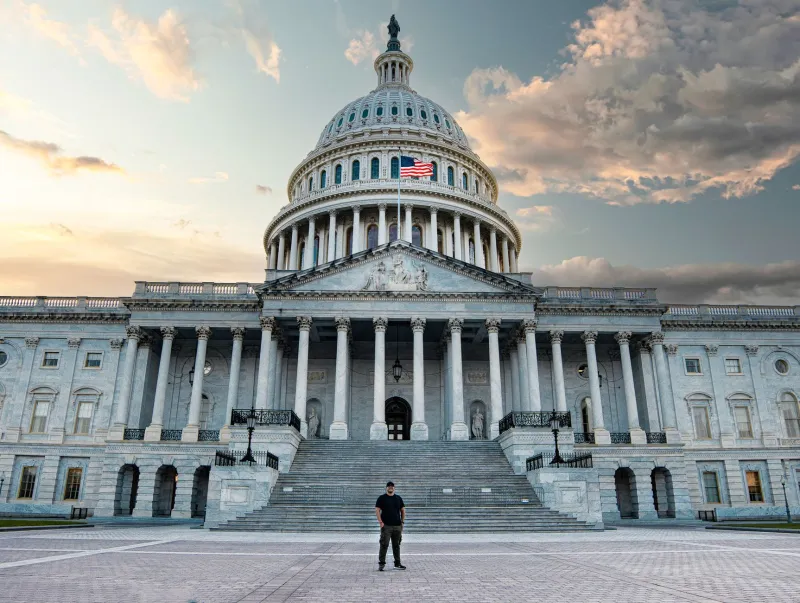
Federal science funding decisions are made just miles from the bench, yet most researchers never engage with the process. KSMV member-advocates share how laboratory scientists can meaningfully shape policy—without stepping away from their research careers.

Digital Benchwork: Five Platforms Changing the Shape of Collaborative Research
Laboratory Technology

Digital Benchwork: Five Platforms Changing the Shape of Collaborative Research

Multi-institution research is now the norm rather than the exception, and the tools labs use to collaborate have evolved accordingly. We profile five platforms gaining traction in KSMV member laboratories, with honest notes on adoption pitfalls.