Open Doors, Open Labs: A Practical Guide to Earning Public Trust One Neighborhood at a Time
Trust in institutions — universities, agencies, and the scientific enterprise generally — has declined across much of the United States. For working scientists, the temptation is to treat this as a communications problem, something to be handled by an institutional press office. KSMV members who have invested in community engagement describe a different reality: trust is built in person, repeatedly, and usually on the audience's terms rather than the researcher's.
This guide collects practical approaches that members have used, scaled for labs of any size and budgets of nearly any amount.
Start Where People Already Are
The most successful engagement efforts do not ask the public to come to campus. They meet people at institutions they already trust: public libraries, schools, faith communities, farmers markets, and community health centers.
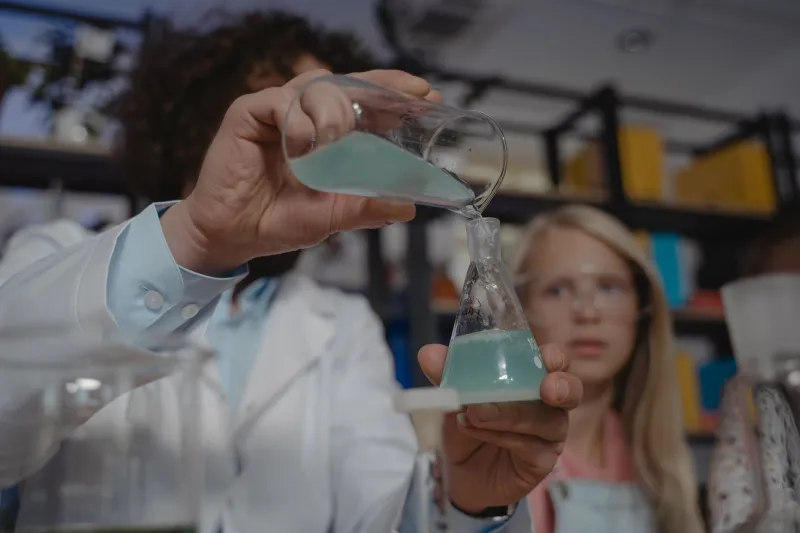
Public libraries deserve particular attention. Nearly every community in the country has one, library systems actively seek STEM programming, and their audiences span every age group. A ninety-minute hands-on session at a branch library — extracting strawberry DNA with middle schoolers, or demonstrating microscopy with inexpensive digital scopes — costs little and reaches families who may never set foot on a university campus.
School partnerships work similarly, but require advance planning. Teachers need programming that fits their standards and calendars; a scientist who offers a single visit in September and disappears by October will not be invited back. Members recommend building one durable relationship with a local school district rather than scattering one-off appearances.
Open Lab Days That Actually Work
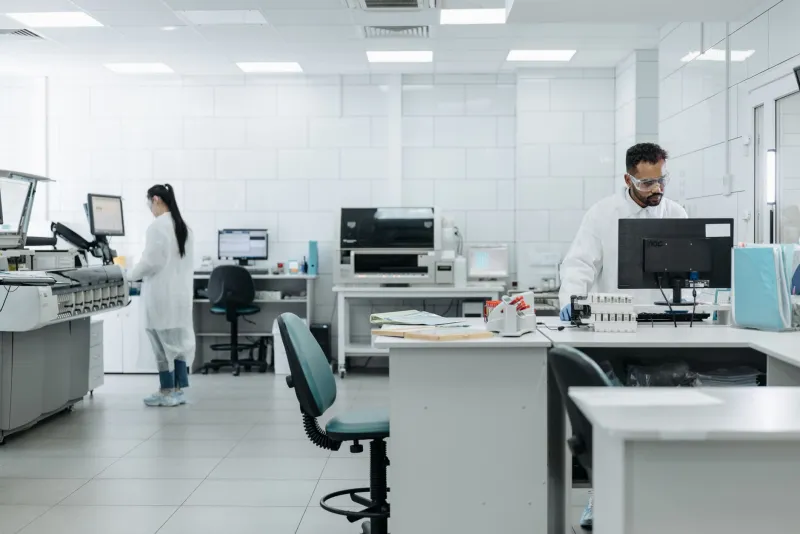
Hosting visitors in your own laboratory remains one of the most powerful trust-building tools available, because it demystifies the physical place where science happens. But a successful open lab requires more than unlocking the door.
Members who run regular open days recommend the following:
- Cap attendance. Groups of ten to fifteen allow real conversation; a crowd becomes a lecture.
- Design a hands-on station. One experiment visitors can touch, even something simple, outperforms any poster display.
- Brief the whole lab. Everyone from the PI to the newest rotation student should be able to explain, in one sentence, what the lab does and why it matters.
- Handle safety and privacy in advance. Chemical hoods, animal facilities, and human subjects data need clear boundaries and signage, arranged before invitations go out.
- Follow up. A short email with photos and a plain-language summary of the lab's work extends the visit's shelf life considerably.
Translation Without Distortion
The persistent worry about public-facing science is that simplification slides into misrepresentation. The members we consulted reject that framing. The goal is not to make findings simpler; it is to make them clearer.
Several principles recur. Lead with the question, not the technique — people care why you're studying something before they care how. Use uncertainty honestly; audiences respect "we don't know yet, and here's how we're finding out" far more than false confidence. Avoid jargon not by dumbing down vocabulary but by asking whether each term earns its place. And always offer a concrete stake: what does this finding mean for the people in the room?
A Long Game Worth Playing
Nothing in this guide will reverse national polling numbers, and members should be skeptical of anyone who promises it will. What community engagement reliably does is smaller and more valuable: it creates a constituency of neighbors who know a scientist by name, who have held a pipette in your lab, and who are measurably less susceptible to the next round of misinformation.
KSMV encourages members to begin with a single library contact or a single school visit this year. The evidence from our membership is consistent: the labs that open their doors are the labs whose science their communities defend.