A Career Doesn't End at Emeritus: Reclaiming the Expertise of America's Retired Scientists
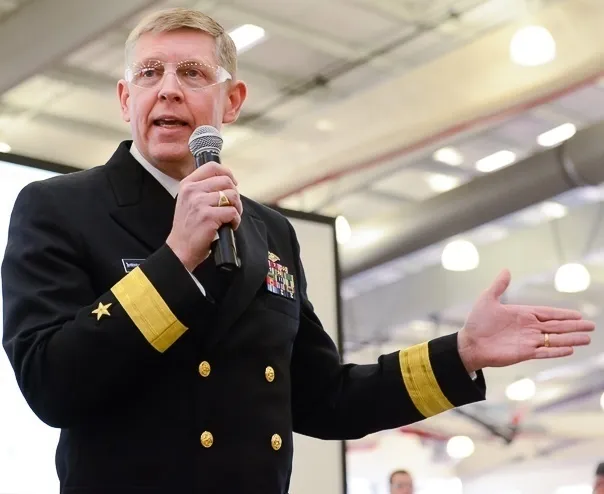
Photo: Stacia Courtney, Public domain, via Wikimedia Commons
When Dr. Eleanor Vasquez handed over her lab keys at a land-grant university in Ohio two years ago, she also handed over thirty-one years of institutional memory. She knew which freezer held the irreplaceable cell lines, which funding officer read the methods section first, and why the third-floor autoclave should never be trusted on Fridays. None of that was written down. Most of it walked out the door with her.
Her story is increasingly common, and increasingly costly. American research is aging into retirement faster than it is building systems to keep that experience in circulation. The question facing societies like KSMV is no longer whether retired scientists have something to offer — it is whether our institutions will build a place for them, or continue to leave their contributions to chance.
The Scale of the Silent Retirement
The numbers are difficult to ignore. Faculty at US research universities skew older than at any point on record, and a substantial cohort of PhD-trained scientists who came of age during the funding expansions of the 1980s and 1990s are now transitioning out of full-time roles. Industry adds another layer: chemists, biostatisticians, and process engineers leaving pharmaceutical and manufacturing careers with deep technical knowledge that no database captures.
What happens to that knowledge today is, in most cases, nothing. Retirement policies at many universities convert emeritus status into little more than an email forwarding address. Access badges expire. Library privileges lapse. The informal mentorship that once happened in hallways ends not because the retiree stopped wanting to contribute, but because the infrastructure for contributing quietly disappeared.
What 'Gray Bench' Programs Look Like
The encouraging news is that scattered models are emerging, largely improvised at the departmental level.
Some institutions have formalized visiting-scholar arrangements for retirees, offering desk space, library access, and co-mentorship roles in exchange for seminar participation and grant-review service. A handful of biotech hubs on the West Coast have seen retired industry scientists organize informal consulting collectives, advising startup teams on everything from regulatory strategy to scale-up pitfalls that only two decades of experience can teach.
Elsewhere, the model is even simpler: the 'adopted mentor.' A principal investigator with a heavy teaching load brings a retired colleague into the lab one day a week to troubleshoot protocols and train new students. The arrangement costs almost nothing and transfers exactly the kind of tacit knowledge that formal curricula cannot.
What these examples share is that nearly all of them depend on a personal relationship. Where no relationship exists, no pathway exists. That is the gap.
Why the Current System Fails by Default
It is tempting to frame this as a matter of goodwill — surely any department would welcome a willing senior colleague. In practice, the obstacles are administrative rather than attitudinal.
Unpaid volunteer roles sit awkwardly with human resources policies designed around employees. Liability questions around lab access deter chairs from extending invitations. Emeritus appointments vary wildly between institutions, and many carry no defined expectations or privileges at all. And for retirees themselves, the transition is often abrupt: a career structured around deadlines, colleagues, and purpose ends on a Friday, with nothing structured to replace it.
The result is a mismatch of enormous waste on one side and unmet need on the other. Early-career researchers consistently report that mentorship is the scarcest resource in their professional lives. Meanwhile, the most experienced mentors in the country are, in many cases, tending gardens.
Where Scientific Societies Come In
This is precisely the kind of problem a professional society is built to solve. Individual departments see only their own retirees; a society sees the whole national picture.
A formalized emeritus network — with vetted visiting-scholar placements, a registry of retirees willing to mentor, review, or consult, and model agreements that resolve the HR and liability questions in advance — would convert an accident of personal connection into a reliable institutional channel. Retired members could indicate availability and expertise; departments and early-career PIs could search for it; the society could underwrite the paperwork that currently stops good intentions cold.
Such programs also serve the retirees themselves. The research on post-career wellbeing is unambiguous: structured engagement, social connection, and a sense of usefulness are among the strongest predictors of healthy aging. A society that helps members stay scientifically active is practicing a form of member care that extends well beyond the annual meeting.
Getting Started
KSMV members and their departments do not need to wait for a national framework. A few practical steps can begin now:
- Conduct a skills census. Survey emeritus and recently retired members on their areas of expertise and willingness to serve as mentors, reviewers, or seminar speakers.
- Create a standing arrangement. Work with institutional counsel to draft a standard visiting-scholar agreement that addresses access, liability, and status in one document.
- Build the match. Pair the registry with the departments and early-career labs most likely to benefit, prioritizing mentors for first-time PIs and graduate students without nearby senior guidance.
- Recognize the contribution. Publicly acknowledge emeritus service — awards, named mentorship roles, meeting presentations — so the role carries the dignity it deserves.
The empty chair at the seminar is not inevitable. It is a design choice, and one that American science can still reverse — with a phone call, a registry, and the institutional will to treat experience as the resource it has always been.