Same Twelve Names: How Volunteer Fatigue Is Quietly Reshaping Scientific Governance
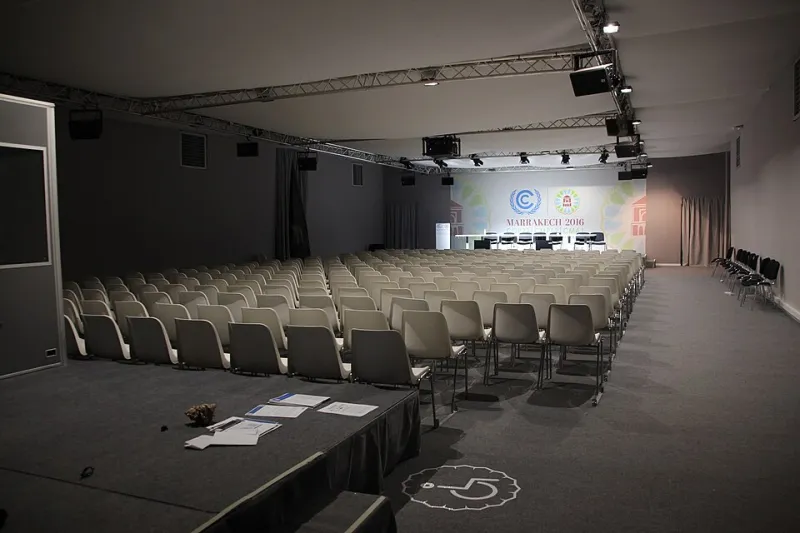
Photo: Takver from Australia, CC BY-SA 2.0, via Wikimedia Commons
Every society has a document like this one: a committee roster, eighteen names long, produced with some ceremony each January. It looks robust. It is also, in many organizations, misleading. Of those eighteen names, perhaps eleven will attend the first meeting, seven will attend the third, and two will still be drafting language in October. The work of governance does not distribute itself evenly. It pools around whoever keeps answering the email.
That pooling is not a scandal. It is a predictable outcome of a model that American scientific societies have relied on for more than a century: governance by goodwill. Members draft position statements, score abstracts, chair task forces, and staff award panels without compensation, usually without release time from their institutions, and frequently without any formal recognition beyond a line in an annual report. The model has produced genuinely distinguished work. It has also produced a concentration problem that many societies are only now beginning to measure.
The roster illusion
The gap between nominal and actual participation is where most governance discussions go wrong. A society can report that 240 members serve on committees while a far smaller number account for the majority of hours logged. Because volunteer labor is rarely tracked in hours, the imbalance stays invisible until a chair retires, changes institutions, or simply stops replying — and three initiatives stall at once.
KSMV's 2026 governance review attempted to quantify this for the first time by asking committee members to estimate their monthly service hours. The distribution was steep. A small share of respondents reported fifteen or more hours per month, roughly equivalent to a second part-time appointment, on top of a full research load.
What the hours actually cost
The costs are not evenly borne. Mid-career scientists with secure positions can absorb committee work as a form of professional citizenship. Early-career members often cannot: an assistant professor weighing service against a tenure dossier will usually, and correctly, choose the dossier. Staff scientists and laboratory professionals may be excluded outright when institutions decline to fund travel to governance meetings. The result is a volunteer corps skewed toward the already established.
There is also a psychological cost that societies rarely name. Volunteers who accept a third or fourth assignment often do so out of loyalty rather than interest, and loyalty has a shelf life. The exit tends to be silent. Members do not resign from committees; they become slower to respond, then absent, then unavailable for the next cycle. By the time a society notices a vacancy, the institutional memory has already left the room.
The pipeline nobody is filling
The leadership pipeline compounds the problem. Committee service is the conventional route to council, then to officer roles, then to the presidency. If the pool of active committee members narrows, so does the slate of people prepared to lead. Societies that once fielded competitive elections now struggle to find two candidates for a single seat — a pattern reported across disciplines and regions, and one that has grown more pronounced as institutional service expectations have tightened.
Three structural remedies under consideration
None of these is novel, and each has costs. What has changed is the willingness of governing boards to treat them as governance design rather than as favors to individuals.
Term limits with rotation requirements. Fixed terms — three years, renewable once — prevent entrenchment and force the deliberate cultivation of successors. The risk is losing expertise faster than it can be replaced, which is why rotation works best when paired with written handover expectations and a shadowing year for incoming members.
Modest stipends or honoraria. Compensation for committee service remains uncommon in the United States, and it is not a substitute for institutional release time. But even a small honorarium reframes service as work rather than charity, and it can make participation feasible for members whose departments will not cover incidental costs.
Transparent workload tracking. The simplest intervention is often the most resisted. A shared log of assignments and estimated hours lets a nominating committee see who has served three times in four years. Several societies now ask nominees to disclose current service commitments before adding another, a practice borrowed from grant review panels.
What good governance requires
A society's committees are not administrative overhead. They decide what the organization says about research integrity, how meetings are run, who receives recognition, and how resources are allocated. When that work concentrates in a handful of hands, the decisions do not necessarily become worse — but they become narrower, and they become fragile.
The honest framing for 2026 is that volunteer governance is a system with capacity limits, and those limits have been reached in many organizations. Societies that treat committee service as an infinite resource will keep publishing ambitious strategic plans and keep relying on the same twelve people to execute them. Those that treat it as a design problem — measurable, bounded, and shared — have a better chance of surviving the retirement of the people currently holding everything together.