The Scientist's Guide to Washington: KSMV Members on Bridging Research and Policy
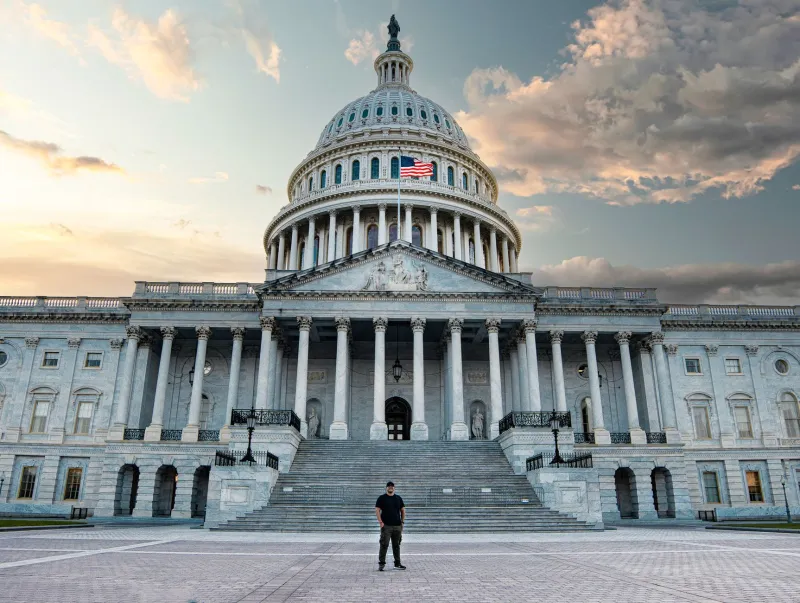
When Dr. Elena Vasquez first walked the halls of the Rayburn House Office Building three years ago, she carried a folder of data on pediatric cancer biomarkers and, by her own admission, very little understanding of how Congress actually operates.
"I assumed advocacy meant becoming a different kind of professional," says Vasquez, an associate professor of molecular biology and a longtime KSMV member. "What I discovered instead is that the people drafting appropriations language genuinely want to hear from working scientists. They just rarely get the chance."
Vasquez is one of a growing number of KSMV members who have woven policy engagement into otherwise conventional research careers. Their experiences offer a roadmap for scientists watching federal budget deliberations with a mixture of concern and curiosity.
Why the Funding Landscape Demands Attention
The arithmetic of American science is sobering. The National Institutes of Health, the largest public funder of biomedical research in the world, operates on an annual appropriation that has fluctuated considerably over the past decade, while the number of grant applications has continued to climb. Success rates for R01 awards—the backbone of academic laboratories—hover in the single to low double digits, depending on the institute.
For early-career researchers, the stakes are existential. Postdoctoral fellows weighing faculty offers increasingly ask not just about startup packages but about the political climate of their state and the stability of its research commitments. Several states, recognizing federal unpredictability, have launched their own life sciences funds and university research initiatives, creating a patchwork of opportunity that varies dramatically by geography.
"The message we give our trainees is simple: the funding environment is a variable you can influence, not just one you inherit," says Dr. Marcus Osei, chair of KSMV's Government Affairs Committee.
What Member-Advocates Actually Do
The KSMV members interviewed for this piece describe a spectrum of engagement, much of it requiring only a few hours per month.
District visits. Congressional representatives maintain offices in their home states, and many schedule meetings with constituents during recess weeks. Scientists who show up with a specific, locally relevant story—a biotech supplier in the district, a clinical trial at the state university—tend to make lasting impressions. Staffers take notes; those notes travel to Washington.
Comment periods and testimony. Federal agencies solicit public comment on proposed rules affecting research oversight, data sharing, and animal welfare. Written comments from practicing scientists carry weight, particularly when they are specific rather than ideological.
Society partnerships. KSMV coordinates annual advocacy days in cooperation with larger scientific coalitions, pairing members with experienced policy staff who help translate research narratives into legislative terms. First-time participants are briefed beforehand on the two or three asks they should keep in front of them—typically sustained appropriations, predictable indirect cost reimbursement, and visa policies that keep international trainees in American labs.
State-level initiatives. Several members have testified before state legislatures on bills affecting research funding or science education. "State government is where a single scientist can genuinely move a needle," Vasquez notes. "Legislatures are smaller. Access is easier. And the decisions made there increasingly matter as federal support becomes less certain."
Practical Guidance for the Reluctant Advocate
Members consistently emphasize that effective advocacy does not require leaving the laboratory or becoming a political personality. Their collective advice:
- Start with your own story. Policymakers respond to concrete examples—a grant that supported twelve jobs, a discovery that reached a patient—more than abstract arguments about national competitiveness.
- Learn the calendar. Appropriations work happens on a predictable cycle. Contacting offices in the spring, before subcommittee markups, is far more effective than waiting for a shutdown fight.
- Build relationships, not transactions. A single meeting rarely changes minds. Members who return to the same staffers year after year become trusted resources when offices need scientific expertise.
- Use institutional channels. University government relations offices and professional societies like KSMV can arrange meetings, provide briefing materials, and handle logistics that individual scientists would find daunting.
The View from Early Career
Perhaps the most striking theme in these interviews is generational. Graduate students and postdocs, members report, are arriving at advocacy with less hesitation than their mentors once did. KSMV's early-career caucus has grown steadily, and its members have proven especially effective on social media and in op-ed placement.
"My generation doesn't see science and policy as separate rooms," says Priya Raman, a doctoral candidate who co-organized a statehouse briefing on infectious disease research. "We see one system, and we intend to have a voice in it."
For a society founded on the principle of connecting scientists, that sentiment may be the most important finding of all: the bench and the policy table are closer than they appear, and the distance between them is covered one conversation at a time.