Seven Ways to Wake Up a Forgotten Conference Archive
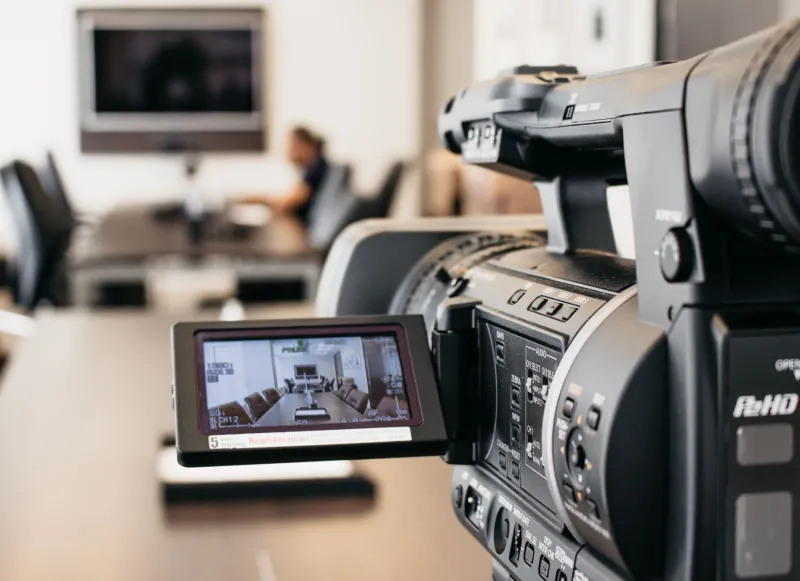
A conference recording is an expensive artifact. It captures travel, registration, audiovisual crews, speaker preparation, and the fleeting attention of an audience. Then, too often, it becomes a file on a server that no one can search, cite, or learn from. In 2026, scientific societies have a stewardship opportunity: treat recorded sessions as durable scientific infrastructure. The following seven moves are practical, sequential, and designed for US societies with limited staff.
1. Begin With Rights and Consent, Not Editing
Before a single transcript is generated, societies should conduct a rights and consent inventory. Who owns the recording? Did speakers consent to distribution, captioning, and reuse? Are there third-party materials in the slides that require permission? A short, plain-language release form at registration can prevent years of ambiguity. The inventory should also flag sessions with sensitive content, unpublished data, or patient information. Stewardship starts with knowing what can be shared and what must be restricted.
2. Transcribe and Caption Everything
Captioning is not only an accessibility obligation; it is a discovery tool. A searchable transcript lets a member find the exact minute when a speaker discussed a method, a reagent, or a policy change. US public-facing materials should meet accessibility expectations, and conference archives are no exception. Automated transcription can provide a first pass, but societies should budget for human review of scientific terms, names, and acronyms. The difference between a rough transcript and a reliable one is the difference between a keyword pile and a usable record.
3. Assign Persistent Identifiers and Rich Metadata
A video without a stable identifier is difficult to cite and easy to lose. Societies should assign DOIs to individual talks or curated sessions where appropriate, and record metadata such as title, abstract, speaker names, affiliations, session date, conference name, and license. Speaker ORCID identifiers should be captured with consent. This makes the archive legible to citation systems, institutional repositories, and future search tools. It also gives speakers a citable output for work that might otherwise disappear from their records.
4. Curate Thematic Learning Paths
Chronological archives are administratively convenient and intellectually weak. Members rarely want every session from a given year; they want a sequence that helps them understand a topic. Societies should build curated paths around recurring themes, such as imaging methods, science policy, career development, or laboratory safety. Each path can combine a keynote, two short talks, and a panel discussion, with a brief editorial introduction. Curation is where an archive becomes a learning resource rather than a storage unit.
5. Make Licensing Explicit and Bounded
Speakers and societies need clear, bounded licenses. A common approach is to separate public highlights from member-only full sessions. Public clips can support outreach and public trust; full recordings can remain a membership benefit. The license should state whether reuse in teaching is permitted, whether clips may be shared on social media, and how attribution should work. Ambiguity discourages reuse. Clarity encourages it.
6. Build a Member Library With Public Highlights
A member-only learning library can be one of the most tangible benefits a society offers, especially for early-career scientists who cannot attend every meeting. The library should be searchable by topic, speaker, and conference year, with transcripts displayed alongside the video. Public highlights, such as award lectures or policy panels, can sit outside the member wall and serve as a recruitment tool. The goal is not to hide knowledge; it is to create a tiered system that respects speaker consent and member value.
7. Measure Reuse and Maintain the Archive
An archive that is never measured is an archive that will be neglected. Societies should track views, downloads, citation mentions, and member feedback. They should also review the collection annually and retire or update sessions that are outdated, inaccurate, or poorly captioned. Preservation matters: files should be stored in more than one location, with checksums and format migration plans. A conference archive is not a closet. It is a living collection that requires maintenance, editorial judgment, and a budget line.
The Stewardship Test
The test for any society archive is simple: can a member find it, cite it, learn from it, and trust it? If the answer is no, the society is sitting on sunk costs. If the answer is yes, the archive becomes part of the society's scientific infrastructure. In 2026, the tools are available. The remaining question is whether societies will treat recorded conference knowledge as an asset worth keeping alive.