The Bench Does Not Hold Itself: Why Laboratory Technicians Are Leaving American Research

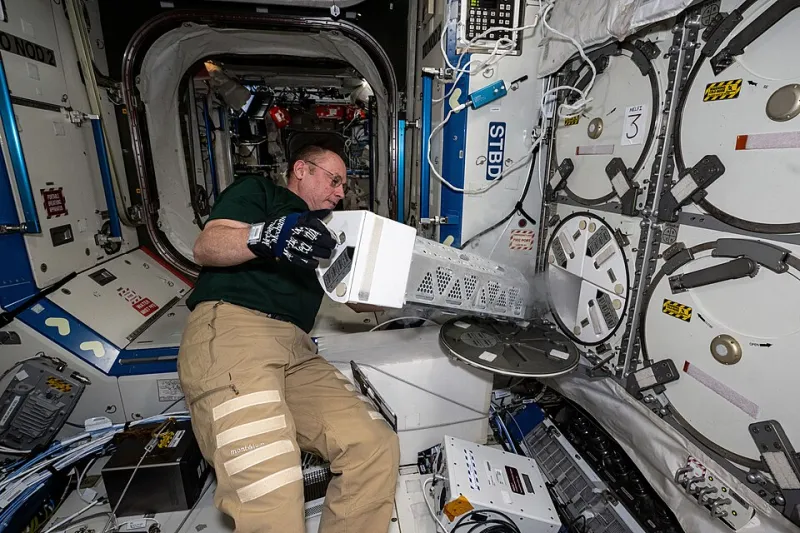
Photo: USAID, Historical Archive, Public domain, via Wikimedia Commons
When a laboratory loses a technician, the announcement rarely reaches beyond the department. There is no symposium, no obituary for the position, no formal accounting of what departs with it: the assay that took four months to optimize, the informal knowledge of which freezer door sticks in humid weather, the instinct for when a run is drifting before the quality control chart says so.
Technicians are the continuity layer of American research. Principal investigators rotate through grants and institutions; postdocs move on within a few years; graduate students graduate. The people who remain, who remember how the instrument behaved in 2019 and why the protocol was amended two years later, are frequently the least compensated members of the team. Many are now deciding that the trade is no longer worth it.
A role that disappears when you look at it directly
The technician shortage is difficult to characterize precisely because the category is poorly defined. Job titles vary by institution — research technician, laboratory specialist, staff scientist, core facility manager — and pay bands vary more. What the roles share is a structural position below the faculty line and, in many universities, below the postdoctoral line as well, with limited authority and even less latitude to negotiate.
Societies that survey their members consistently find the same concerns in roughly the same order: compensation that has not tracked inflation or local cost of living, a career ladder that terminates after two or three rungs, and professional development budgets that exist on paper but are consumed by travel to meetings where the technician's own work is presented by someone else.
The exit is usually quiet, and often permanent
The departure pattern is well documented in anecdotal form across core facilities and academic departments. A technician with eight years of experience takes a position in industry quality assurance, or in a hospital laboratory, or leaves scientific work entirely for a role with predictable hours and a defined pay scale. The receiving employer gains a trained, meticulous worker. The sending laboratory loses the person who trained the last three graduate students on the instrument.
What makes the loss acute is that technician expertise is largely undocumented. Method sections record what was done, not what was learned. When the person who knows why the centrifuge requires a five-minute warm-up leaves, that knowledge does not transfer. It simply stops existing.
What professional societies can actually change
Societies do not set university pay scales. They do, however, control three levers that matter: credentials, visibility, and the composition of the professional community itself.
Certification as a genuine ladder. Formal credentialing — specialty certifications in core facility management, advanced instrumentation, quality systems, and laboratory safety — gives technicians a portable, verifiable record of advancement that is not dependent on a single supervisor's goodwill. Certification is not a substitute for salary, but it changes the terms of the negotiation. Several societies now maintain continuing education requirements tied to credential renewal, which also creates a structured reason to remain engaged with the field.
Member benefits designed for staff, not faculty. Registration tiers, reduced dues, and travel support aimed at technicians remain uneven across the sector. A meeting that costs a technician two weeks of take-home pay to attend, where the program assumes attendees have discretionary institutional funds, does not recruit technicians — it filters them out. Societies that have introduced staff-level rates and dedicated travel awards report measurably broader participation.
Recognition that is not a plaque. Awards for technicians exist, but many are ceremonial and internal. Recognition with career consequences — featured presentations, named contributions in facility publications, service on instrumentation advisory panels, eligibility for society committee seats — carries weight when a technician applies for a promotion or a position elsewhere.
The pipeline problem nobody names
There is a second shortage behind the first. Technician roles rely on a steady inflow of people with two- and four-year technical degrees, and community college programs in the life sciences have seen uneven enrollment and inconsistent industry partnership. Societies that care about the workforce have a stake in that pipeline, though few have treated it as their business. Articulation agreements between community colleges and research universities, paid internship placements in core facilities, and mentorship from working technicians are all interventions that a professional society can convene even when it cannot fund.
What sustainability would look like
A sustainable bench career would include a visible ladder from entry technician to senior specialist to facility director, with credentials recognized across institutions. It would include pay that permits a career without a second household income. It would include a professional community where the person running the instrument is treated as a colleague rather than a service provider.
None of that will arrive through a single initiative. What tends to change institutions is a combination of pressure and structure: societies that publish credible workforce data, that set expectations for how staff are included in meetings and committees, and that build the credentials their members can carry to a hiring committee. The alternative is what is already happening — a slow, unannounced transfer of expertise out of academic research and into organizations that recognize its value more clearly.